
- Leveling Machine
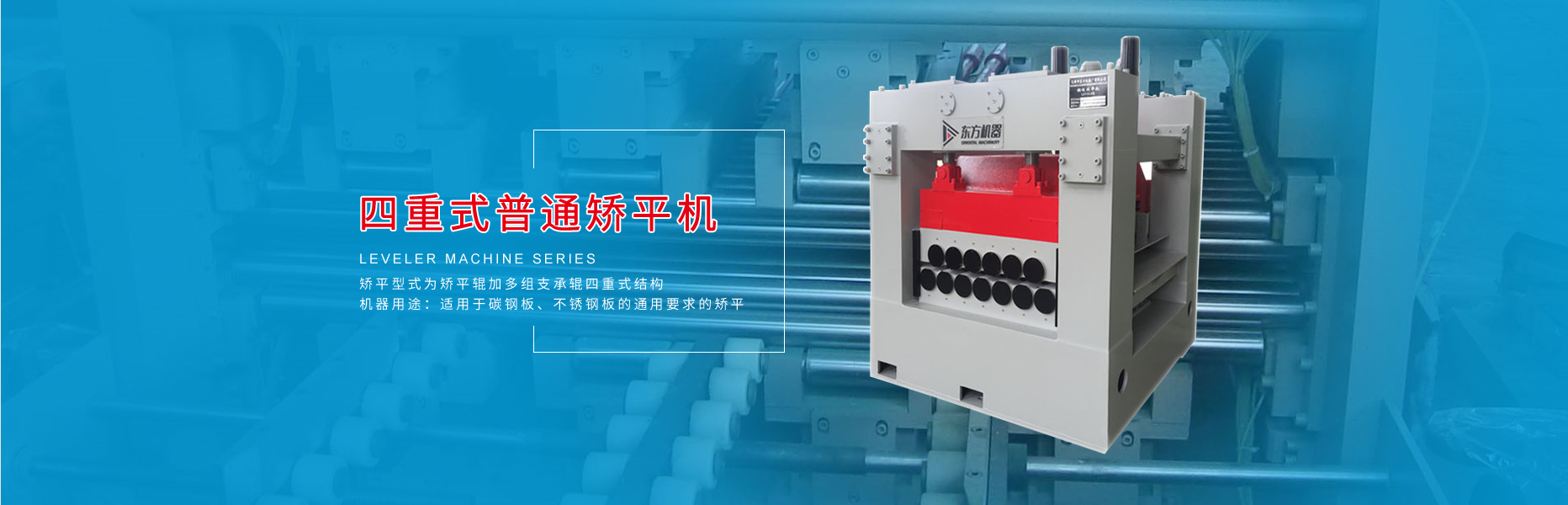
- 4-high leveler machine
- 6-high precise leveler machine
- Leveler machine for special...
- Coil Straightening Machine
- Automatic high speed cut...
- 6-high Automatic cut to...
- Automatic tracking shear...
- Automatic rotary shear...
- Tension leveling line
- Automatic high speed cut...
- Thick Plate Decoiling...
- Automatic Slitting Machine...
- Slitting Line
- Slitting and cutting to length...
- Main parts
Leveler Machine Series
Production Line Series
Cutting Machine
Intelligent container...
Cylinders of shear...
- Wuxi Oriental Machinery Factory Co., LTD.
- Add:No. 50, Hongxiang Road, Hongshan Industrial Park, Wuxi City, Jiangsu Province
- Tel:86-510-88703103
- Fox:86-510-88213609-8008
- Jianwei.Tang 86-139-1533-8317
- Fan.Gao 86-159-6182-5555
| Different Requirements of Leveling Machines for Various Materials |
| Update Time:2014/9/28 8:36:44 Clicks:10209 |
The material used in a leveling machine dictates different requirements for its castings. Specifically, the structural requirements for alloy castings include the following aspects:
Reasonable Wall Thickness: The wall thickness of the casting should be reasonable. The primary consideration is to ensure the fluidity of the alloy, followed by avoiding excessively thick walls wherever possible.
Uniform Wall Thickness: The wall thickness throughout the casting should be as uniform as possible. Hot spots (thermal nodes) are prone to defects such as shrinkage cavities, shrinkage porosity, and coarse grains.
Proper Wall Connections: Wall connections must be rational and incorporate structural fillets. Transitions between thick and thin walls should be smooth, and wall connections should avoid intersections and sharp corners.
Facilitated Feeding: Thick-walled sections of the casting should be designed to allow for convenient feeding (risering) to compensate for shrinkage.
Avoidance of Large Horizontal Surfaces: The casting should avoid having large horizontal surfaces as much as possible.
Unrestricted Shrinkage: The design must ensure that the casting is not restricted during the shrinkage process. |
Total Pages:1 Page 1  |
| Previous Article:What are the basic requirements for castings used in leveling machines? Next Article:ddffff |